Pages

Wednesday, 23 September 2015

Sign Hunting in Stoke Newington part 1

Stoke Newington or 'Stokey' to the locals is a district in the London Borough of Hackney. The area has been settled since medieval times, when it was a small village a few miles from London used mainly as a stop for travellers heading north. Nowadays it is well and truly a part of the city, though it is renowned for retaining some of its village character with a large array of open spaces and a bustling town centre.

Over the last century Stokey has seen its fair share of action, from being heavily bombed during World War Two through to significant urban regeneration in the last twenty years. Nowadays it plays home to a diverse and vibrant community as well as some of the most famous ghost signs in London. With the latter in mind, I headed over on a grey Saturday morning with my camera at the ready.

elloma preparations ghost sign stoke newington london

After arriving at Stoke Newington overground station I headed left and up the high street. It wasn't long before the first find of the day presented itself, a peeling ghost sign tucked away on the side of a light industrial building. As the sign says, this was the former home of Elloma Preparations Limited, who according to Companies House were a firm active from 1947 until 1996. Exactly what they were preparing remains a mystery. 

elloma preparations ghost sign stoke newington london

Due to its length it was difficult to fit the sign into one shot, at least for an amateur like me. From what i've managed to capture the lettering looks to have been painted in a bold grotesque typeface, though most of the details have suffered significant fading over the years.

John Hawkin cotton spinners lancashire ghost sign stoke newington london

Continuing up the high street it quickly became apparent why the area is so renowned by ghost sign hunters with the appearance of a lovely example for John Hawkin & Sons, a Lancashire cotton spinning firm. The company had quite a few locations in London and if you want to know more about them, I highly recommend the London Road Croydon blog's excellent article here.

The type is a mixture of a playful, upright script with a very lovely ampersand and some clean sans-serif faces for good measure. Most of it is still readable and you can just make out the remnants of an earlier sign coming through here and there.

cakebread robey ghost sign stoke newington london

On the other side of the street, a building on the corner of Tyssen Road features an enormous sign belonging to the firm of Cakebread Robey & Co, providers of a rather extensive range of hardware services.  Famed for their stained glass in particular, numerous examples of the company's work can reportedly still be found in pubs and churches around the South East.

A striking combination of white and red, the sign itself is an example of a palimpsest, a term which in this case means a sign painted on top of an older one. The lettering isn't especially decorative but the overall layout and the use of different sized panels gives it plenty of character. Anyway, who needs fancy serifs and swashes when you've got a massive bleedin' wall?


wholesalers clock stoke newington london

Further up the high street this rather striking blue clock hangs on above the pavement, a remnant from a time when advertising your business with a giant public timepiece was the done thing. Sadly, the name of the firm responsible has disappeared, leaving us with only the word 'wholesalers' and a clock face frozen at twenty-five past five.

The lettering is a light condensed sans serif with a touch of art deco style, arranged on a curve. If you half close your eyes, the whole thing looks a bit like a cyclops sporting a big toothy grin. Or maybe it's just past my bedtime.

vogue cinema ghost sign stoke newington london

Next up is the former home of the Vogue cinema, which still retains its original 1940's signage on a chamfered wall. According to Cinema Treasures excellent article, the venue opened as the Majestic in 1920 before being renamed Vogue in the forties. In 1958 it was closed, and lay derelict for 42 years before being refurbished as a restaurant and flats at the turn of the millennium. During this period of disuse it was thought to be the longest closed cinema building in London. I can only imagine how exciting it would have been to get inside and photograph it during this time.

The lettering is in a stylish sans serif that is similar to Futura, judging by the very specific G. However, the lower crossbar on the E suggest that it may have had some customisation. Either way it's a great piece of history and kudos is due to the owner for preserving it.

no cycling painted sign stoke newington london

After crossing the road and starting to head back this charming hand-painted sign caught my eye. The delicate italic lettering features high contrast thicks and thins as well as flowing, soft serifs that enhance the polite authority of the message. If I'd had my bike with me, I would have been walking by now.

coronation avenue stoke newington london

On nearby Victorian Road I came upon the grand gateway to Coronation Avenue, crowned with some fantastic ornamental lettering. Featuring a flamboyant kick descending from the uppercase A and extended serifs on the N's, this is a typically Victorian style and one that I never tire of.

Although a peaceful looking gated community today, Coronation Avenue has known its share of tragedy, being directly hit by a bomb in World War Two that killed as many as 170 people. A harrowing first hand account of that fateful night can be found here, and serves as a stark reminder of dark times in the not too distant past.

richardson and sons shirtmakers hackney ghost sign stoke newington london

Continuing back down the high street, I spied this almost unreadable ghost sign high on the side of a building. Painted in a purpose built decorative panel, there's not much that can be said about the type but according to the Spitalfields Life's excellent article, it is an advert for Richardson & Sons Shirtmakers of Hackney, Leyton and Walthamstow, painted around 1955.

rochester castle pub mosaic stoke newington london

Nearby, the Rochester Castle pub provided the first mosaic of the day. The colour scheme of brown and gold is a good match for the fittings of the pub and the lightly serifed type has some great decorative touches including a double crossbar on the A and extended tails on the R's.

According to owners J D Wetherspoon, the pub itself was built in 1801 by Richard Payne, who was originally from Rochester. Prior to that, the site was home to another inn called the Green Dragon which had occupied the space since at least 1702. The Rochester is also noteworthy for being the longest held premises in the company's portfolio, being purchased by the chain as far back as 1983.

marks and spencer ghost sign stoke newington london

Across the road, a Georgian style building set back from the street features a very faint ghost sign for the original owners: none other than Marks & Spencer, the famous department store. Now home to a branch of Sports Direct, the fortunes of this building seem to have declined slightly since its construction in the 1930's, however its well preserved exterior lends a touch of faded glamour to the street.

the three crowns pub sign stoke newington london

As it was getting on for lunchtime the Three Crowns pub was next to catch my eye with its beautifully elaborate side entrance, painted in an regal combination of blue and gold. The decorative carving features the pub name written in some tightly spaced lettering that's not too flashy, but boasts elegant flared serifs and a satisfying curved crossbar on the N.

the three crowns pub saloon lounge sign stoke newington london

The side entrance is also home to some fantastic ironwork featuring the words 'Saloon Lounge' picked out in a neat gold script. I love the way the type and ornaments intertwine here and the angled lines are a great touch. The only thing that lets it down is the dodgy kerning between the L and the O that you could drive a truck through. My inner designer screams in terror, while the realist in me reckons that I ought to get out more.

At this point I nipped through this wonderful doorway and into the pub, so it seems like a good place to finish part one. If you made it this far, thanks for reading and look out for part two coming next week. Cheers!

Tuesday, 5 May 2015

Brighton Bound part 2

In the first part of our walk around Brighton we explored the North Laine area which proved to be a treasure trove of great typography. You can check out the original post here. After stopping for a quick pint and something to eat we headed towards Kemptown to continue the day's exploration.

kemp town brewery entire st james tavern brighton bulldog

On the way up St James street we passed a tall, rounded building featuring raised sans serif lettering that reads "Kemp Town Brewery Entire". According to the Brewery History website this was a pub rather than a brewery, known at the St James Tavern and owned by Kemp Town Breweries Ltd who became part of Charringtons in 1963. Although it's unclear when the pub closed, the building has been the home to Brighton's oldest gay venue, The Bulldog, since 1979.

kempt town brewery entire st james tavern brighton bulldog

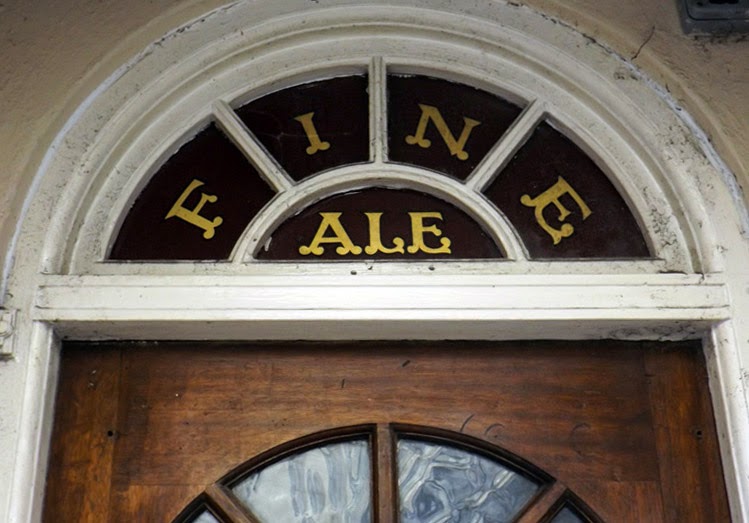
Above the domestic looking doorway of the Bulldog another trace of the former St James Tavern can be seen in this decorative lettering on the fanlight glass. The rounded terminals and sharp serifs of the type have some circus poster influence, feeling friendly and inviting. I can only hope that the Bulldog continue to fulfil the promise of fine ale inside.

old john the baptist school kemptown brighton girls & infants entrance

After continuing up St James Street we arrived in Kemptown, a mostly residential part of town that just happens to have a great selection of old pubs, a microbrewery and more antique shops than you could shake a jewel-encrusted cane at.

On the corner of Upper St James street a tall, grey building features some raised lettering above a doorway in a condensed sans font. According to Wikipedia St John the Baptist's school was located here from 1850 to 1989 and like many schools of it's time featured separate entrances for boys and girls. The building is now rather empty looking, with the girls entrance lettering remaining as the only sign of its former use.

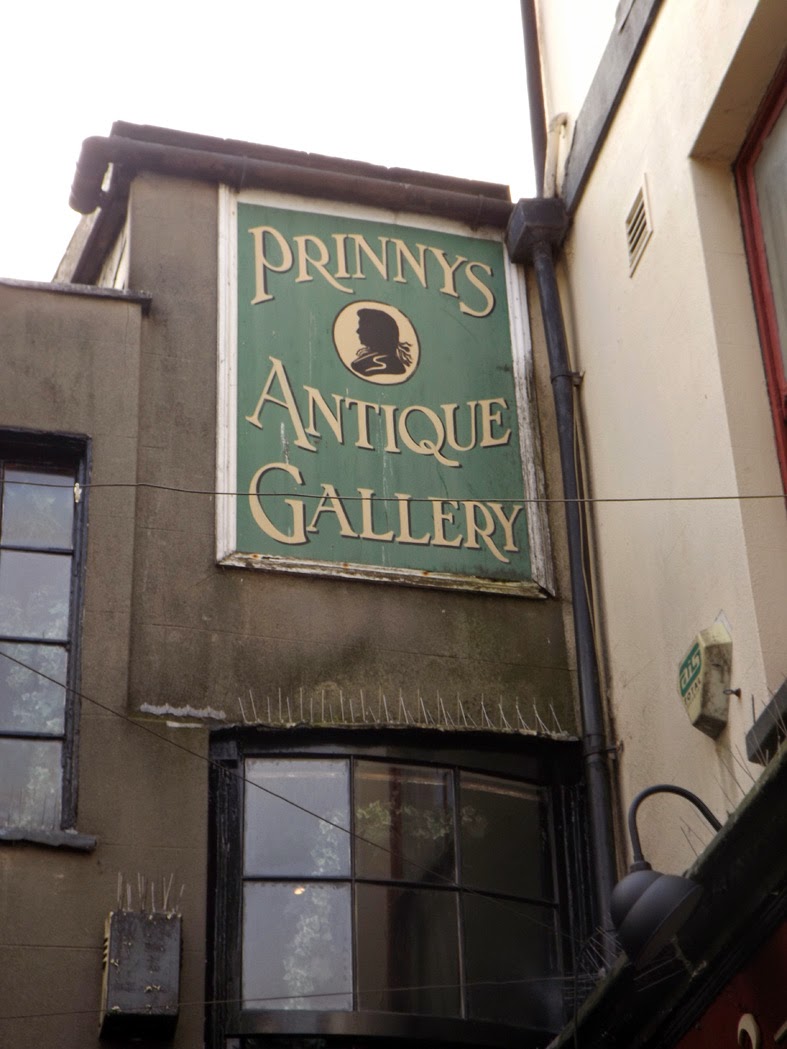
prinnys antique gallery painted sign the lanes brighton


After a few hours in Kemptown we retraced our steps back into town toward The Lanes, a historic maze of narrow alleyways that was once the heart of Brighton's old fishing town. Although now home to a a mix of antique, jewellery and designer shops, The Lanes retain loads of authentic character and is a must-see when visiting the city.

accrington nori brick lanes brighton

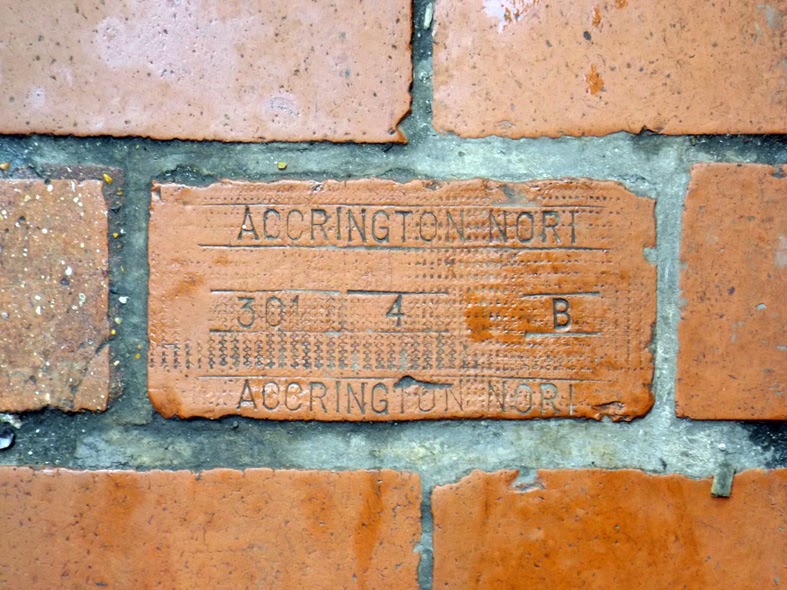
Naturally, I was too busy looking at the floor to notice the shops and couldn't resist stopping to snap part of the walkway that featured a brick with the original makers mark of Accrington Nori, a well known Lancashire brick works that is still in operation today. Famed for their strength, Nori's bricks were used in the construction of landmarks such as the Empire State Building and the Blackpool Tower.

According to legend, the name 'Nori' came from an unintentional backwards spelling of the word iron. Although there's not a lot to say about the type here, I thought this was an unusual piece of history and a great find tucked away in one of Brighton's oldest streets.

maison francis hairdressers typographic doorway brighton

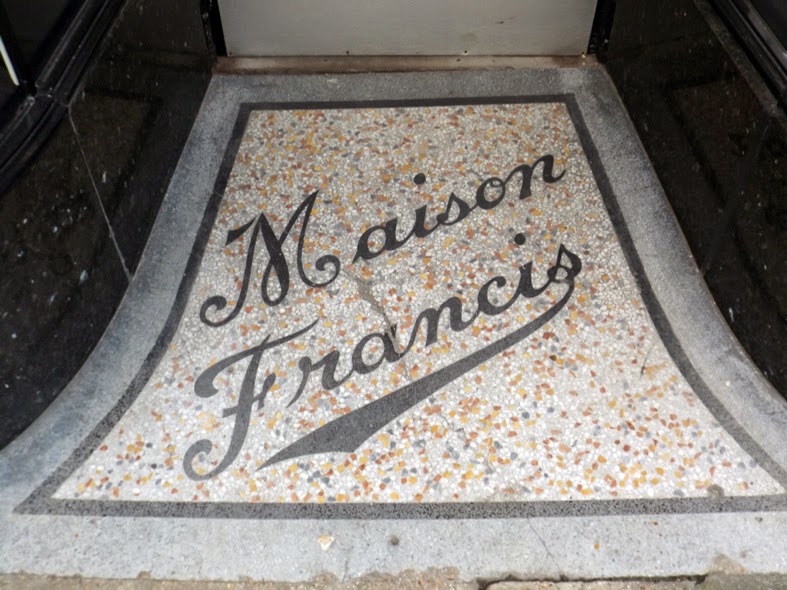
Heading back along Western road later in the day we passed the doorway to no.26 which features some eye catching script type. According to the My Brighton and Hove group Maison Francis was a ladies hairdresser first listed in the Kelly's directory of 1948, though it may have been trading much earlier than this. The script letter forms are beautifully drawn, especially the uppercase M with its loops and curls and the F with its extended swash. The dynamic, baseball-style underline extending from the lowercase S finishes the whole thing off with a bit of flair.

old western hotel mosaic brighton paris house

Above the Paris House pub at 21 Western Road an ornate mosaic for the old Western Hotel survives in remarkably good condition. The pub here has had many names over the years and according to Portslade History's excellent article it was known as the Western Hotel from 1854 to sometime in the 1920's.

The mosaic itself is a stunning piece of work with a still-vibrant colour palette of gold, blue, brown and green. The type is full of flamboyant 19th century style, big swashes on the capitals, decorative cross bars and ornamental serifs abound. I'm a sucker for type on a curve and I think it works well here, giving room for the ornamental elements to fill out the rest of the space in a suitably swirly fashion.

langham hotel brighton old painted sign

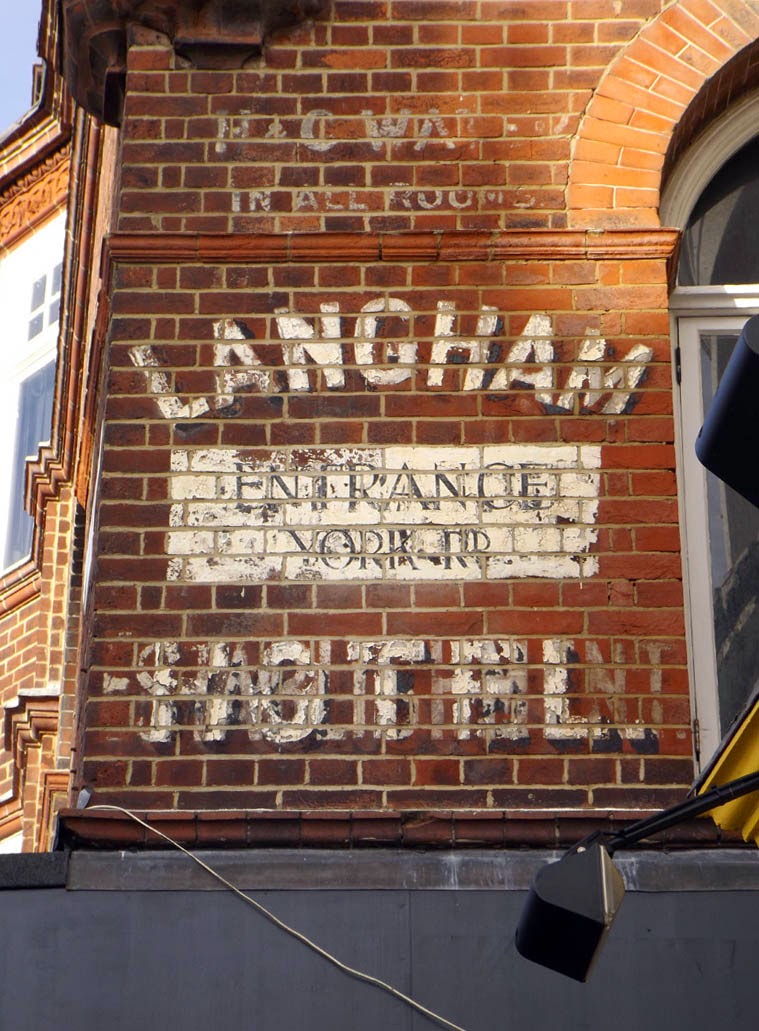
On the other side of Western Road, right on the boundary between Brighton and Hove, a painted sign for the Langham Hotel can be found on the side of an elegant red brick building. I've not been able to find out much about the Langham, though it does appear to still be in business. The sign helpfully tells us that it offers "H&C WATER IN ALL ROOMS", which is always handy.

Though heavily worn the sign is still legible and features some chunky arched sans serif type with a heavy black drop shadow for good measure. Looking closely it seems that the word "HOTEL" was painted over another word at some point, though it's difficult to make out exactly what this says.

ghost sign brighton

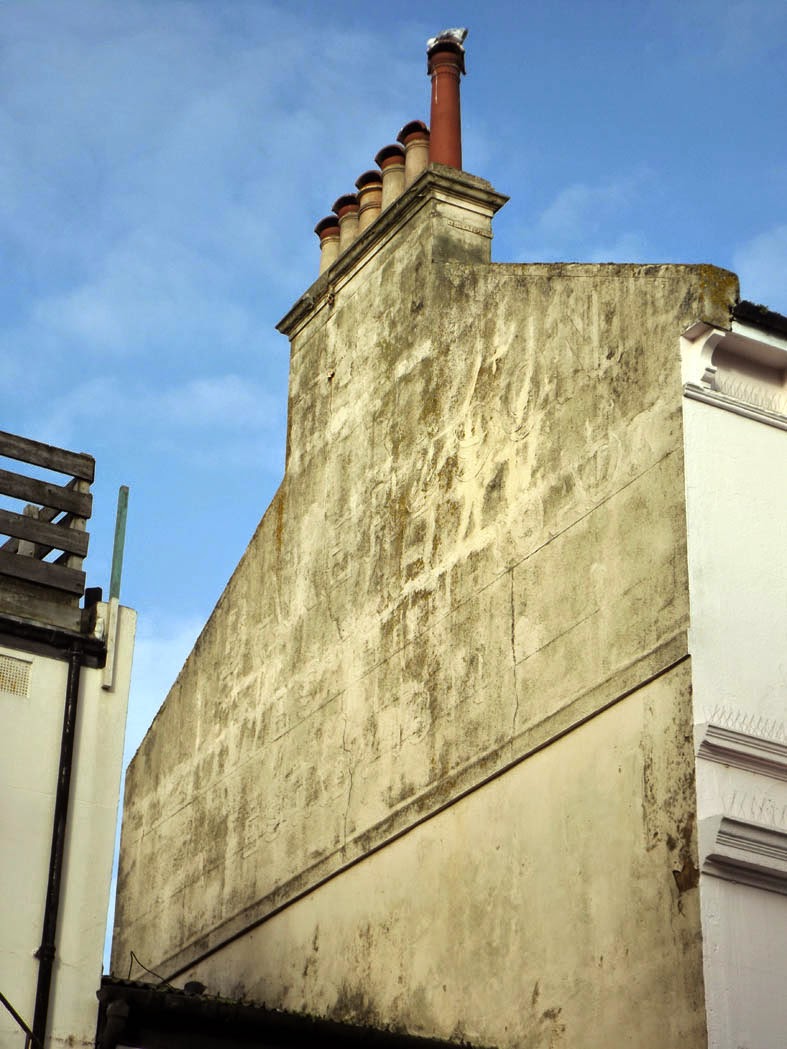
On a street just off Western Road the faint outline of letter forms can just about be made out in the dirty whitewash on the side of this residential building.

ghost sign brighton

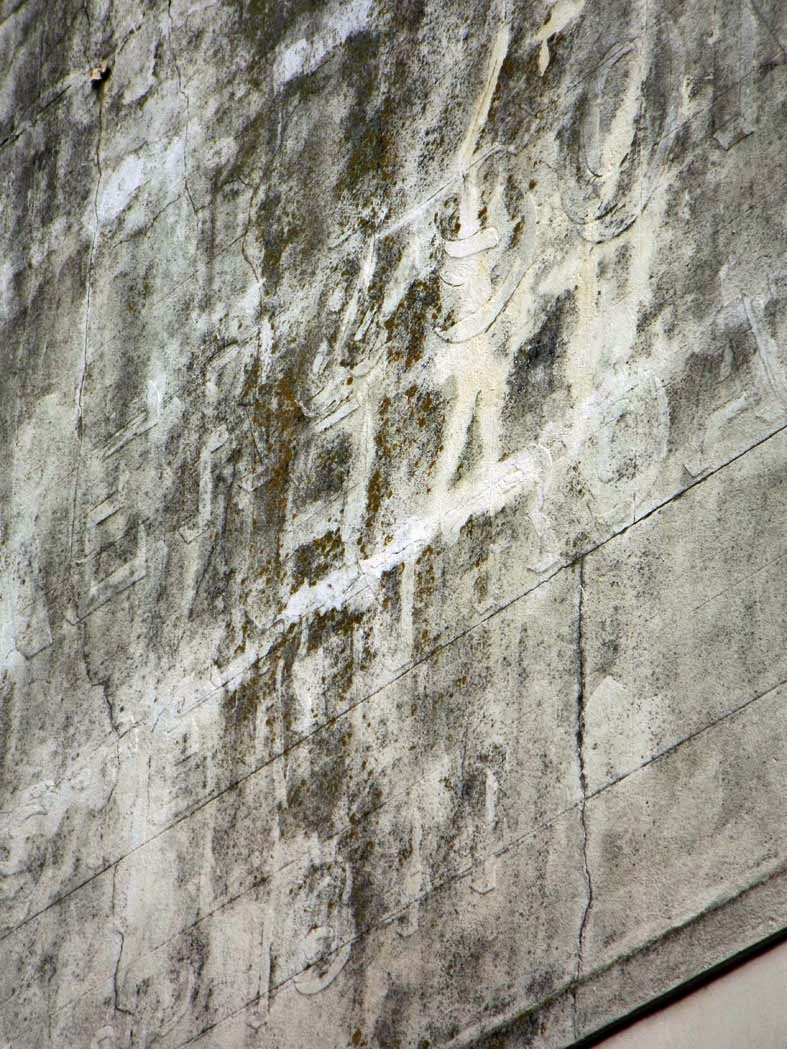
Looking closely, I can just about read "ER & SONS" in a bold sans font but it's difficult to manage anything beyond that. It's a shame to see another example of a painted sign that's been covered over, especially as it looks to have been a large one with a quite a few lines of type.

lea & sons famous blouse shop preston street brighton sign

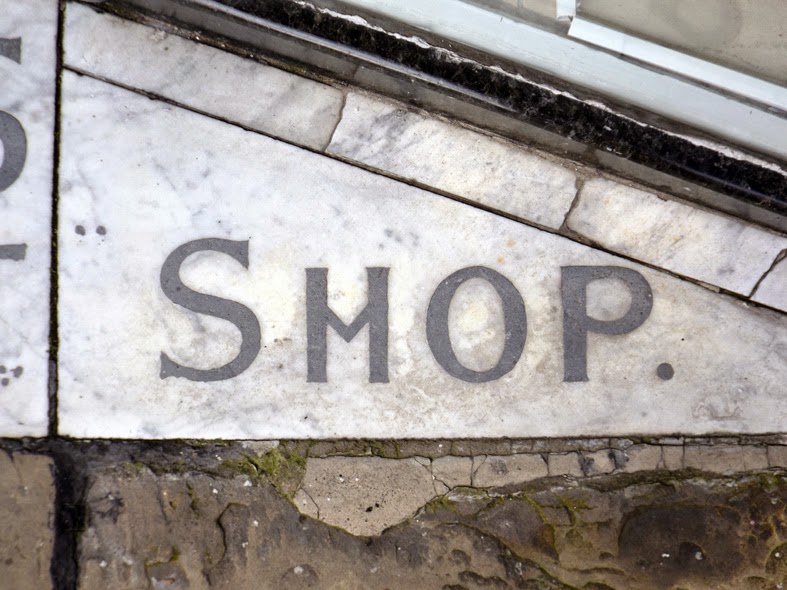
The final find of the day was this typographic marble flooring for Lea & Sons Famous Blouse Shop, tucked away just off Western Road on Preston Street. According to the excellent Through the Eyes of a Brighton Girl website, Lea & Sons opened here in 1914, selling blouses and hats before later becoming a drapers and closing for good in the 1950's. 

The elegant shopfront looks a bit empty these days, though it's easy to imagine it being quite sophisticated in it's time. It seems that someone has tried to cover the central panel of the decorative floor though fortunately the letter forms are still easily legible.

lea & sons famous blouse shop preston street brighton sign

A closer look at some of the characters reveals some quirky features such as the v-shaped crossbars on the H and A, and in the photo below some slight serifs can be seen on the uppercase S. All in all a classy composition that's just begging to be restored to its former glory.

lea & sons famous blouse shop preston street brighton sign

As we headed back to the hotel I was left with an overall impression of Brighton as a city that has embraced it's heritage, injecting fresh life into its historical areas and enabling them to be appreciated by new generations. This can be seen in the preservation of the North Laine area (see part one), the thriving markets of The Lanes and the fantastic range of characterful pubs, many of which proudly retain their original interior fixtures.

Instead of being ripped up or covered over, many subtle traces of the past are waiting to be discovered in doorways, high on the side of buildings and on the pavement underfoot. The feeling that I've only scratched the surface of these was confirmed after spotting another handful of great examples when driving home the next morning. There's definitely unfinished business for me here and next time I might even make it as far as the beach.

Once again thanks are reading Urbantyping and feel free to add comments or criticisms below. Cheers!


Wednesday, 29 April 2015

Brighton Bound part 1

Earlier in the year we headed down to Brighton for a weekend by the sea. As it happened we spent more time getting lost in the maze of streets around the city centre than on the beach, but the amount of great type on offer (not to mention the pubs, markets and galleries) made the diversion worthwhile.

shopfront brighton old tiles

After parking in Regency Mews and walking up Preston Street the first find of the day presented itself. Located in a shop doorway, these earthy coloured tiles feature little hints of a decorative typeface that's almost completely faded away.

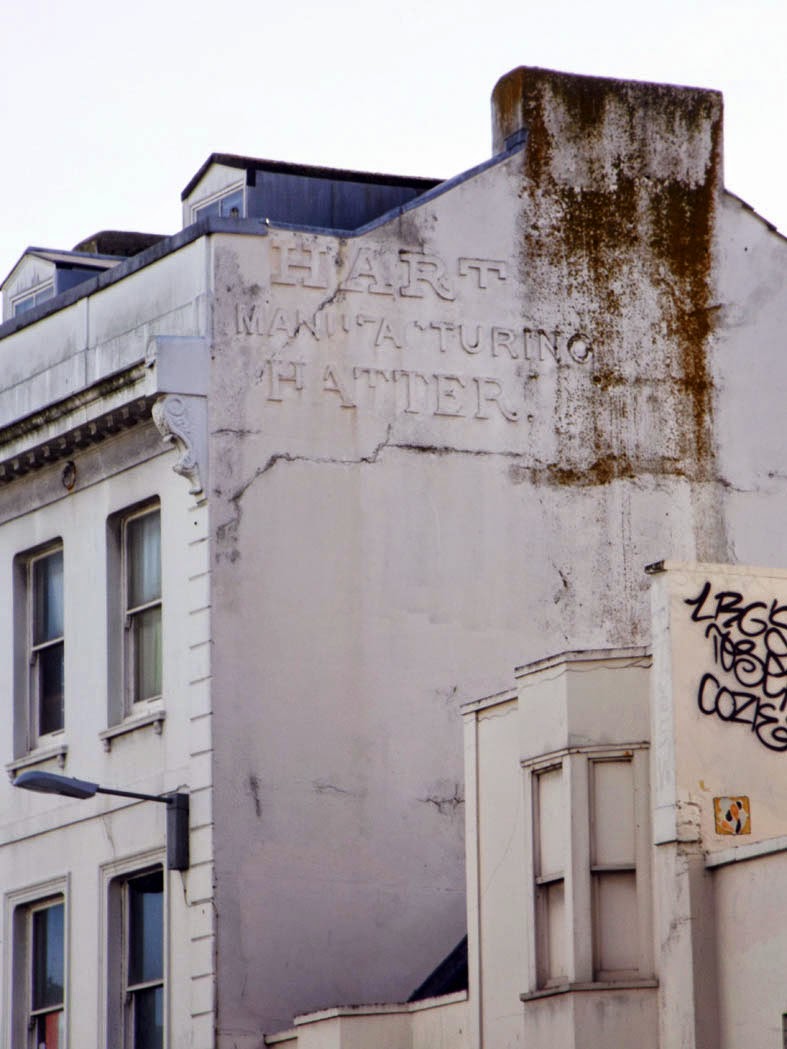
hat manufacturing hatter building north street brighton

Heading into town presented an opportunity to test the zoom lens after spotting some raised lettering high on the side of a North Street building. According to Photo History Sussex, Hart Manufacturing Hatter was founded in the 1850's, meaning the type itself could be over 150 years old. Pretty good going considering its exposed location. The lettering seems to be a mixture of three typefaces, a Clarendon-style slab serif, a regular grot and a more formal serif.

decorative tiled doorway brighton

Our next stop was the North Laine conservation area, a network of narrow streets that was once home to a busy community of traditional workshops and businesses. Nowadays it's packed full of antique markets, boutique shops, exotic eateries and trendy pubs, but amidst all this chaos plenty of great old type survives to tell the stories of some former inhabitants.

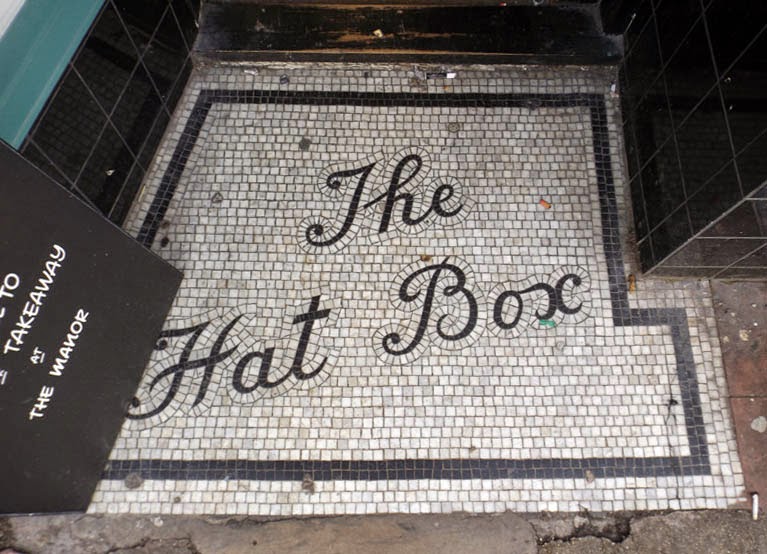
the hat box mosaic doorway brighton north laine

In the doorway of what is now a hairdressers this quirky mosaic marks the former home of a milliners shop. The information available on Geograph tells us that The Hat Box was in business here between 1911 and 1940. The mosaic features script lettering with extended swashes and rounded terminals on the capitals that give off an informal, friendly vibe. A great example of a preserved mosaic and the first of many to come.

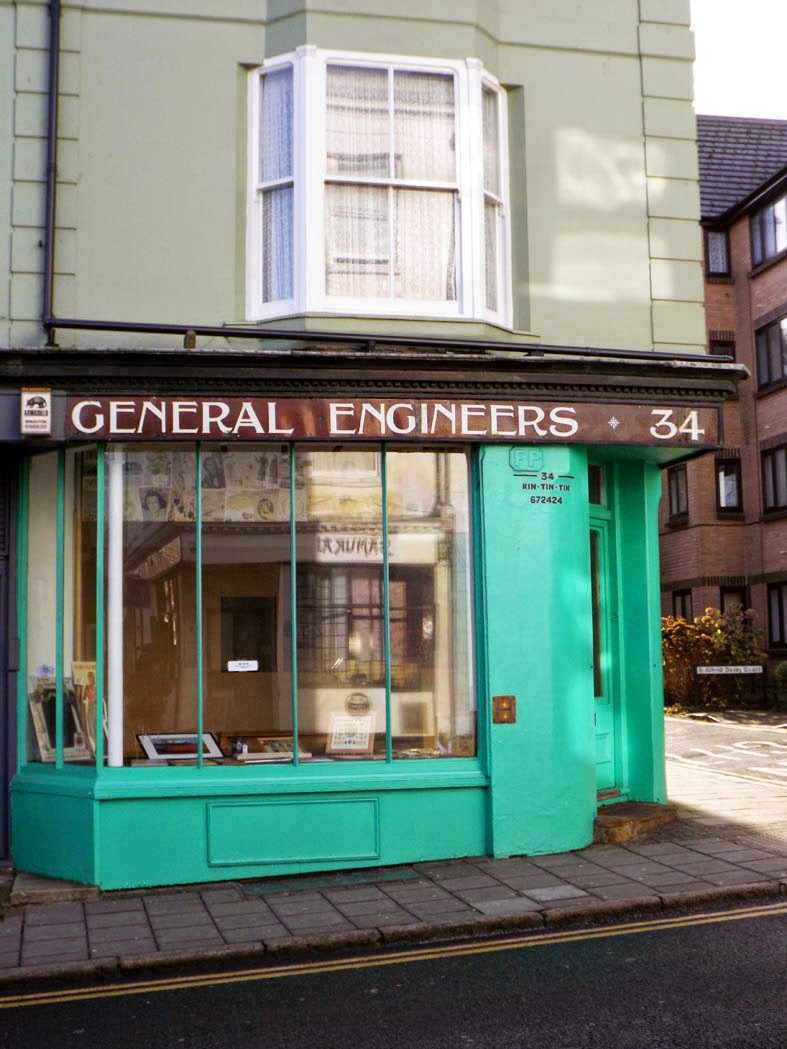
rin tin tin general engineers sign shopfront brighton

On North Road, the brightly coloured shopfront of no.34 features a brilliant hand painted sign for J.Smith, General Engineers. For the last 30 years this shop was the home of Rin Tin Tin, a antiques shop run by former graphic designer Rick Irvine which sadly closed in late 2014. According to the Brighton Argus, Rick uncovered the sign for the previous business during some decorating work and loved it so much he decided to display it permanently.

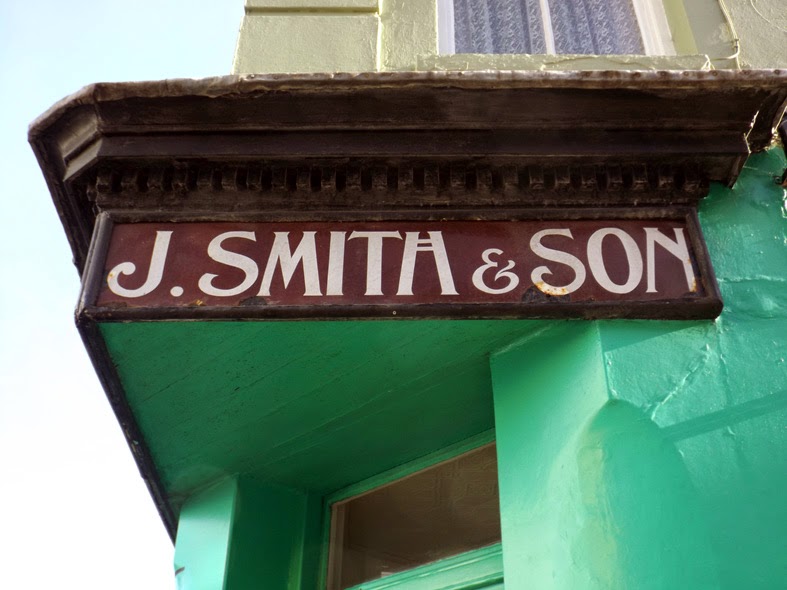
rin tin tin general engineers sign shopfront brighton

It's easy to see why this stunning sign was kept in place with its decorative Rennie Mackintosh inspired type. The double crossbar on the H, the ampersand with it's cheeky swash and the rounded terminal on the J are all great features and look fantastic against the burgundy background.

cassey hosiers shop mosaic gardner street brighton

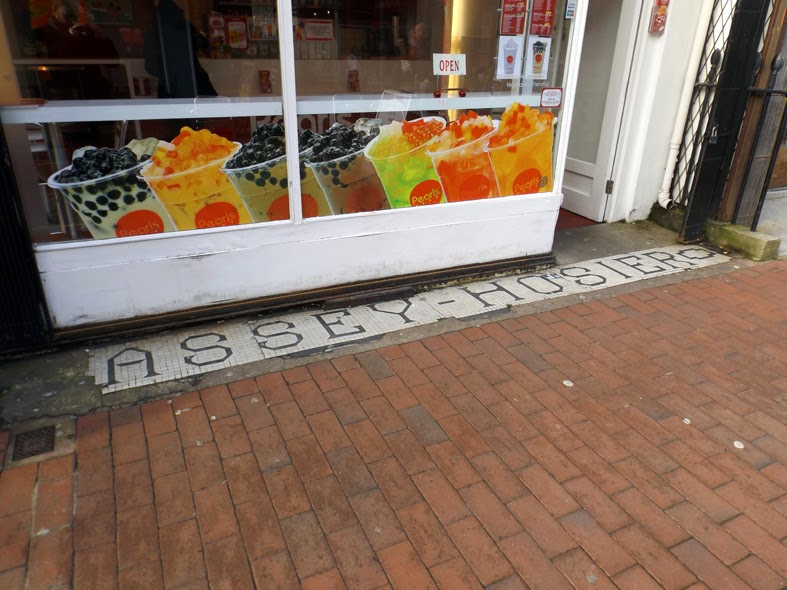
At the top of Gardner street a triangular grid mosaic for "Assey - Hosier" remains in place outside what is now a juice bar. A look at the My Brighton and Hove website reveals that the full name of the business was Cassey Hosiers, run by Herbert and Daisy Cassey from around 1905 to sometime in the 1960's.

cassey hosiers shop mosaic gardner street brighton

The typeface has a unique, angular character and sharp serifs. Set on a rigid square grid, it has a slight Latin feel and is certainly nothing like the mosaic type I'm used to seeing. Interestingly, graphic designer Joe Porter recently developed a full typeface from these characters called Hosier. It's an excellent piece of work and I'm sure the Cassey's would have been pleased to know their shopfront is still being admired today.

terry's watchmaker shop mosaic gardner street brighton

Next door to Cassey's lies another mosaic, marking the former premises of one of Brighton's oldest trading families. According to My House My Street John W Terry established a bakery here in the 1840's which survived for 20 years. His son then founded a watchmakers that operated from 1870 all the way up until the 1980's, bringing the family's total to over 140 years on Gardner Street. Not bad!

As the mosaic belonged to the watchmaking business it's safe to assume that it's at least 100 years old. Despite this, the elegant script tiles remain in good shape and now serve as a reminder of the Terry family's legacy.

25 gardner street brighton painted sign

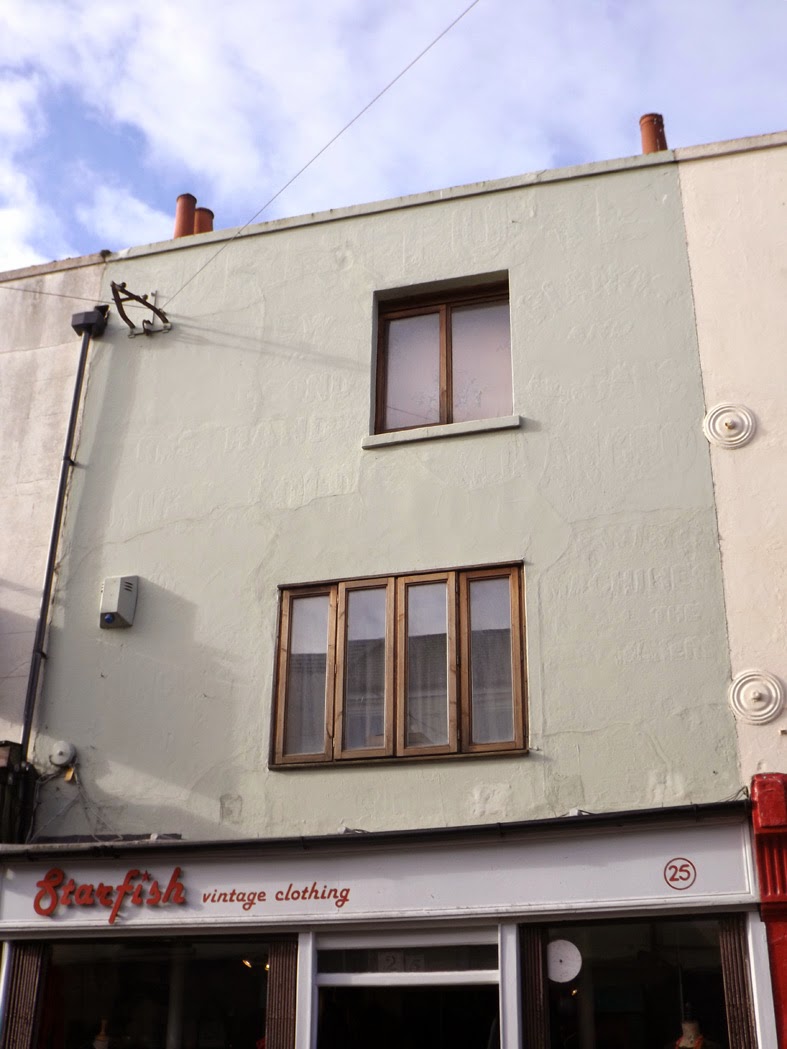
Having seen so many great pieces of preserved type so far it seems an even greater shame that further down Gardner Street, two buildings worth of painted signs have been cruelly covered with a coat of drab grey paint. If you look closely it's possible to make out lettering all over the face of the building which continues onto the next. Quite why anyone would want to cover these old painted signs is beyond me, and as such these buildings are the only black mark in what is otherwise a wonderfully preserved part of town.

wheatsheaf inn bond street brighton old pub

On nearby Bond Street, a Sass and Belle shop now resides in the former Wheat Sheaf Inn. According the My Brighton and Hove, The Wheat Sheaf traded from the mid 1800's to sometime in the 1970's, though some sources state that it could have been in business as early as 1800. All that remains now is some debossed lettering on the front of building in a nicely spaced grot typeface, though at least the owners had the good sense to leave this in place.

coal hole cover brighton star foundry t w porter

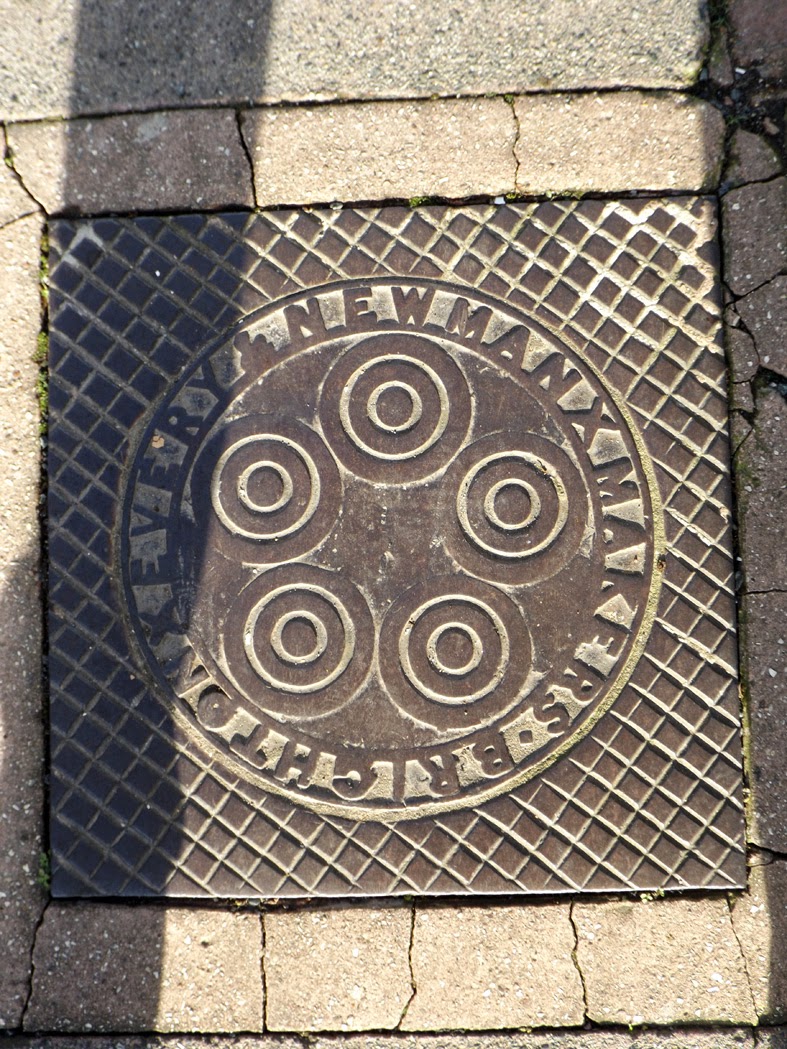
It certainly wouldn't be a good type hunt without some coal hole covers and the North Laine area has plenty. The most common is the design above, produced by T.W Porter's Star Foundry who were based in nearby Church Street until the early 1900's. There are also quite a few examples of the design below, produced by Every & Newman. Both feature fairly crude-cut grot typefaces, leading me to believe they might be a bit older than some of the more elaborate designs found elsewhere in the city.

every and newman coalhole phoenix foundry brighton

theater royal painted sign brighton

Leaving the North Laine area and heading into the centre of Brighton we passed the Theatre Royal, a grade two listed building and one of the oldest theatres in the country, being built in 1807. Although the building itself is impressive it was the peeling lettering on its side that caught my attention, a bold condensed typeface designed to be legible all the way down New Road. 

haywards self locking coal plate brighton

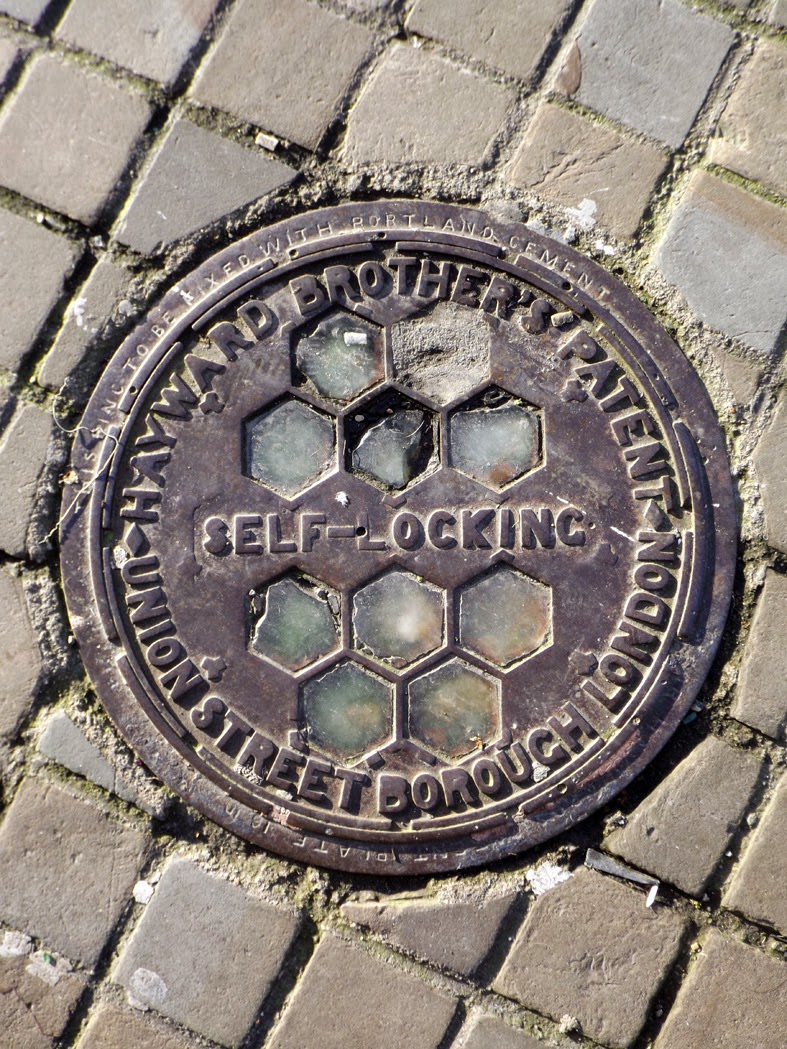
After a wander through Victoria Gardens we headed towards North Street, where I just had time to grab a shot of this coal hole cover. Produced by Hayward Brothers of London, it features two rings of type and glass panels to illuminate the storage room below. A more complex design than the examples from earlier in the day, it appears to have aged better despite being in heavily pedestrianised area. The Faded London blog has a fantastic history of Hayward Brothers and coal holes in general, be sure to check it out here

At this point we stopped for a much needed pint so it seems like the ideal place to finish the first part of our type hunt around Brighton. Thanks for reading and look out for part two in the next few days.

Cheers!

Wednesday, 25 February 2015

City of Contrasts: Exploring East London

One cold Saturday morning the better half and I nipped into London hoping for a walk along the Thames foreshore. Unfortunately, we completely forgot to check the tides (if only I'd got up for the shipping forecast) so we ended up heading to St Paul's instead.

saint pauls old choir school building london

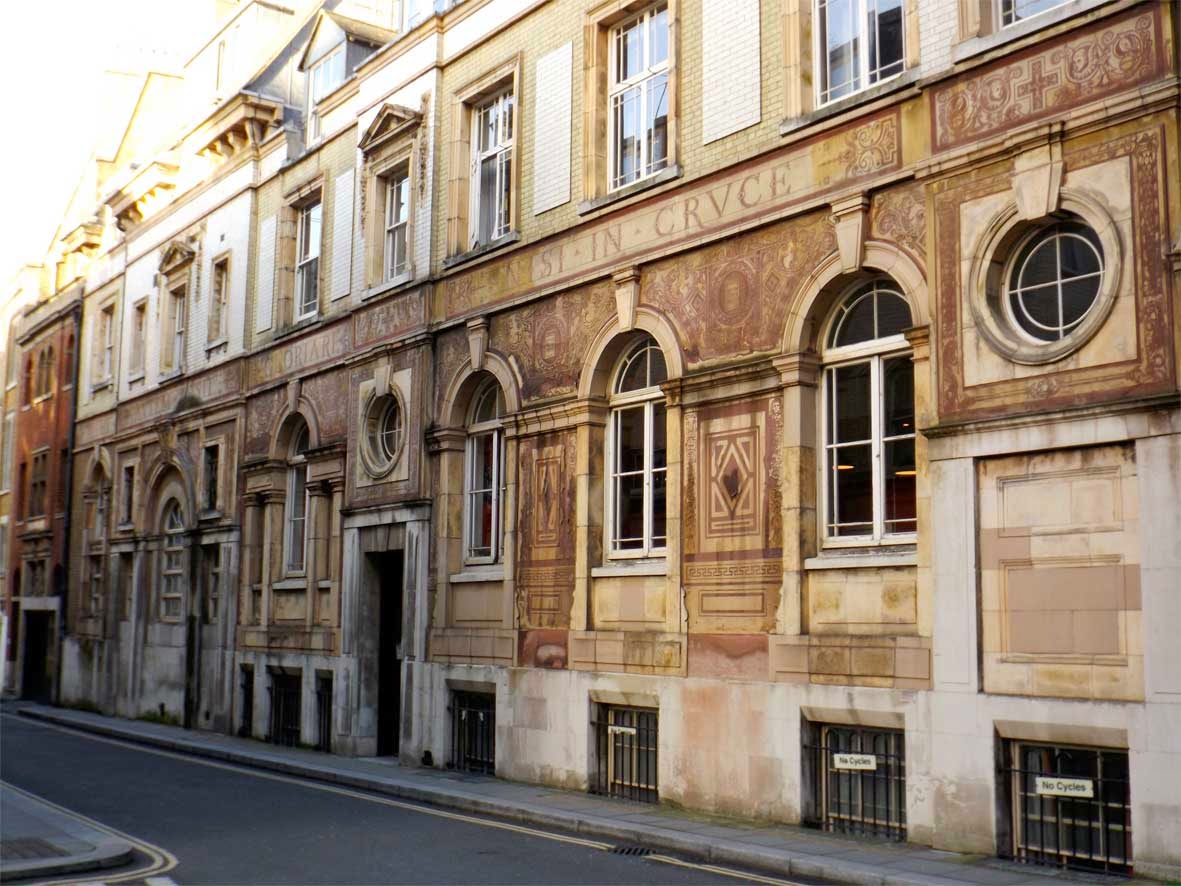
After developing a cold sweat in the presence of the cathedral entrance fee we settled for admiring the view from the outside. While on the steps I caught a glimpse of an unusual building down Dean's Court. What we found is one of London's real hidden gems: the St Paul's Old Choir School building. Featuring elaborate sgraffito carving all over the outside, this curious place looks as though it was teleported straight from the streets of Prague.

saint pauls old choir school building london close up

Looking closely at the type running around the building reveals the huge amount of effort that has gone into each character. Lots of little details like fills, key lines and ornaments are all seemingly designed to show off the skill of the carver.

saint pauls old choir school building london close up

This close up shows the level of detail in the pictorial carvings. The book with VETVS TESTA MENTV is a particularly nice touch with it's detailed frame and angelic guardian.

snashall and son ghost sign kings wardrobe london

After navigating a quaint network of narrow streets we came upon a quiet courtyard called Wardrobe Place. This was once the site of the King's Wardrobe, a storehouse used by King Edward III to house state robes removed from the Tower of London. Destroyed in the great fire of 1666, the wardrobe lives on through a blue plaque within the square.

Wardrobe Place is definitely one of the most charming areas of London I've come across. In many ways it feels like a step back in time, all eerily quiet with few signs of the bustling city penetrating the stillness. It's also rumoured to be haunted; according to London Constant a ghostly lady in white has been regularly sighted running from door to door.

Luckily for her she's not alone. Wardrobe place also contains another ghost (albeit in sign form) for Snashall & Son, Printers, Stationers and Account Book Manufacturers (see above). Although worn the sign is still readable and features some of the finest painted script I've seen. Sadly, there's a lack of available information on the company but we can safely assume that they haven't been manufacturing account books in Wardrobe Place for some time.


Leaving Wardrobe place this monogram nestled in an arched doorway caught my eye. I can just about make out an S, B and perhaps an ampersand but otherwise it's hard to decipher and unfortunately the building offered no clues either. Looks like this is another addition to my ever growing list of mysteries!

garlick hill street sign london

Next we headed back out onto Queen Victoria Street in the direction of Bank. On the way we passed this fading street sign high on the side of a building. According to The Street Names blog, Garlick hill was named after a nearby wharf where shipments of garlic were once landed. Although London has thousands of these old painted street signs this one has a particular charm, its italicised type and small E.C marker giving it a oddly polite tone of voice.

church court st margarets close sign london

Speaking of street names, nearby St Margaret's Close is evidently a rather new addition to the map. I'm not sure when the change from Church Court took place however the original sign has been left meaning this great contrast of old and new London can still be enjoyed. 

Although there's nothing distinct about the typography Church Court has a beautiful weather worn feel, especially when compared to clean, shiny Albertus of today's sign.

While we're on the subject, for more information on the thousands of alleyways and passages around London I'd recommend Ivor Hoole's extensive guide here. Although dormant since 2004, Ivor has at some point visited over 400 sites around central London and dug up an impressive amount of information on each. This is definitely one of the best resources you could hope to find!

7 lothbury street sign

Continuing east we passed along Lothbury, a small street running behind the Bank of England. Once home to candlestick makers and copper smiths, today the street is part of London's bustling financial district.

This medieval looking piece of type marking No.7 Lothbury has some great quirks: the L's extended decorative tail, the lowercase h and the U that looks more like a V. The R and the Y feel like a bit of an afterthought, squeezed in together at the end which gives the whole piece some pleasing hand carved character.

carved 4 lothbury london

Continuing down Lothbury I couldn't pass this beautiful stone carved No.4 without taking a picture. The lines are dead straight with beautifully sharp serifs and a bright gold inlay. It's hard to believe that this could have been done by hand.

drapers hall sign london

Next stop was Drapers Hall, home to the Drapers Company, one of the historic London Livery Companies that have represented the major trades of the city since 1515. Drapers Hall has been present at this site since 1543, despite being burnt to the ground on more than one occasion.

This sign near the entrance to the Hall has some unusual typographic features including a high crossbar on the uppercase H and an L that gets around the issue of kerning by dropping below it's partner. The impression overall is of an elegant, condensed serif with a hint of decorative style.

throgmorton restaurant entrance london

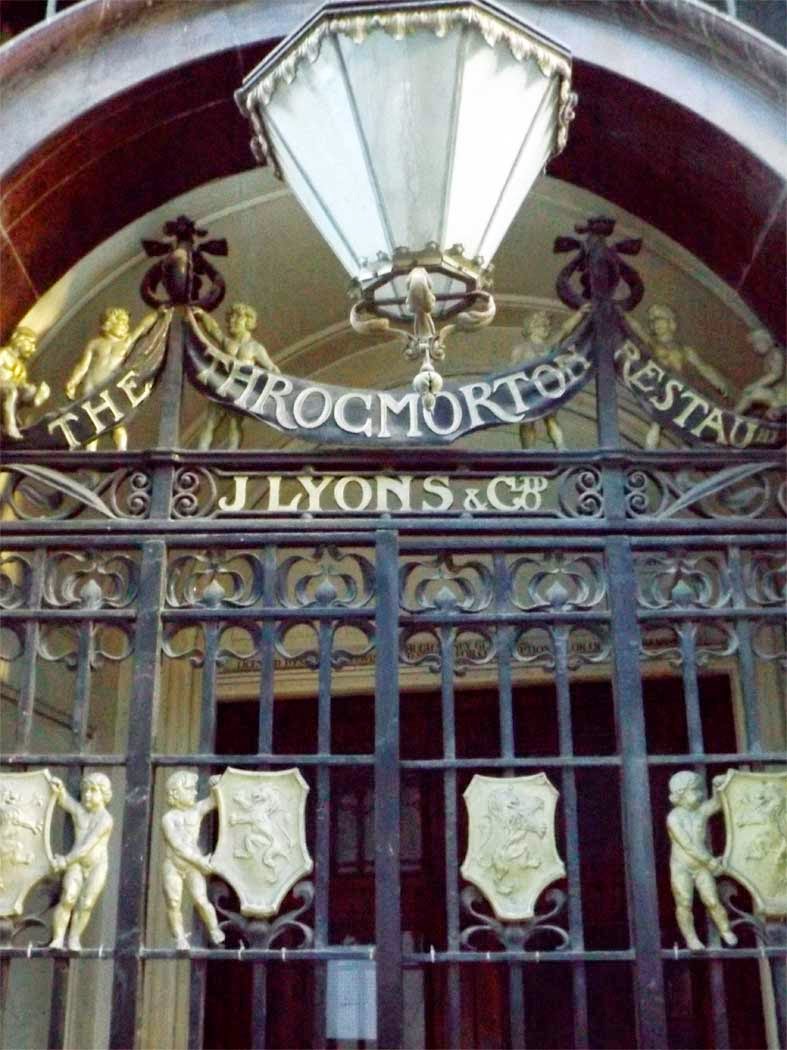
Not too far on, this grand entrance marks the former home of the Throgmorton Restaurant. For many years owned by tea merchants J Lyons & Co, the restaurant was in continuous use between 1900 and 2013 and was very popular amongst financial workers, who favoured its grand interior as a place to wine and dine clients. An brief history of the restaurant can be found here.

The restaurants iron gate with its elaborate mix of patterns, figures, heraldry and banners also features some noteworthy type. The word 'Throgmorton' has some impressive long tailed R's while 'Restaurant' looks as though the designers ran out of room and crammed the smaller characters in at the end. My personal favourite part is the lock up of '& Co Ltd' which stands out as great example of typographic layout.

railway tavern pub london

Heading towards Liverpool Street station the sight of the Railway Tavern seemed to pull me in like a tractor beam. After all, it was getting on for lunchtime.

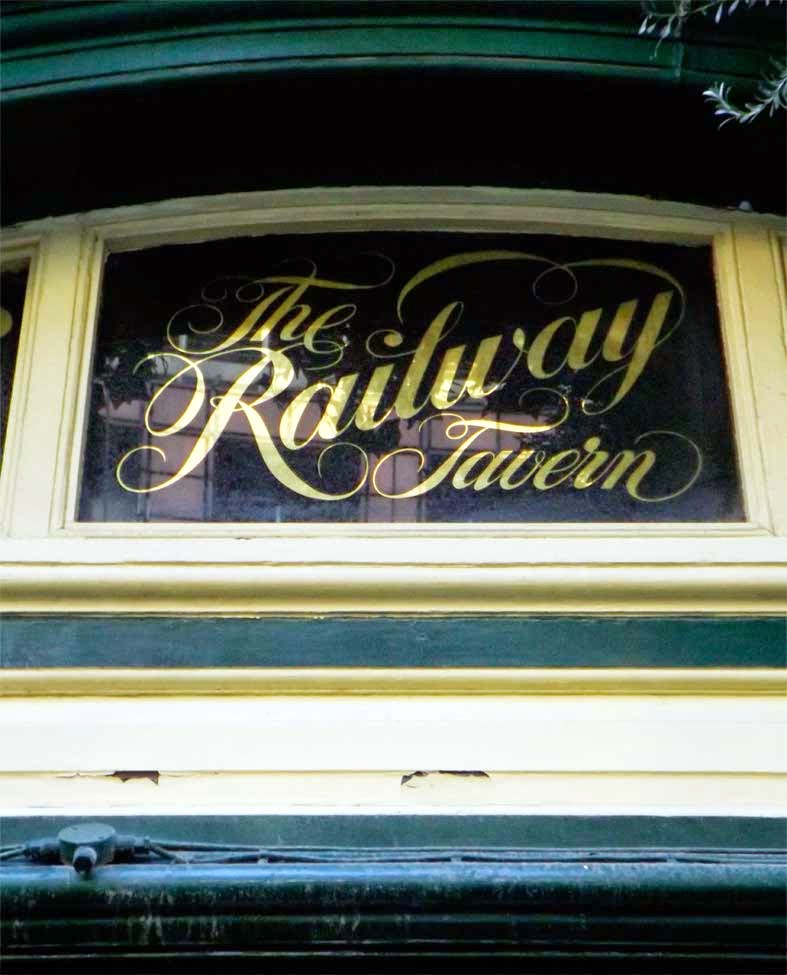
According to Pub History the Railway has existed on this site in one form or another since 1736. Situated conveniently close to one of London's largest stations, there's no doubt that it has been the cause of many missed trains over the years. Apart from the liquid offerings inside my favourite aspect of the pub has to be this painted window above the side entrance.

Featuring some flowery script and a nice big drop cap R this window is full of character. Details like the extended bar of the T in 'The' and the lowercase L in 'Railway' give the type plenty of flow while the swash coming from the tail of the Y leads your eye around and down to 'Tavern'. Very clever indeed.

welz pork butcher ghost sign bethnal green london

At this point there's a bit of a hole in my series of photos (damn you, Railway Tavern!). So, we'll pick up the pace a few hours later, halfway down Bethnal Green road.

This old sign for C. Welz Pork Butcher has certainly seen better days but is still hanging in there. An archive issue of The London Gazette reveals that Christian Welz, Bethnal Green pork butcher applied to change his surname to Wells 9th of July 1915, which enables us to date the sign to some time before that. Looking closely it seems as though the name was also changed to V.A. Welz at one time though most of this seems to have crumbled away now.

The sign itself is great, with no nonsense bold red type that would have been quite visible on the whitewashed wall at one time. The Welz (or Wells) family may be long gone but their legacy will hopefully live on here for some time to come.

owen and thomas ghost sign bethnal green london

Walking slightly further down the road revealed ghost sign number two, this time for Owen & Thomas, a firm of Linen Drapers listed in the 1921 Street Directory.

Painted in a simple style commonly seen around London, the sign features black lettering on a white background with a heavy black border. The type is a no-frills sans serif with only the small ampersand providing a hint of decoration. As can be seen in the picture the site is now home to a bank, however the height of the sign has allowed it to escape being covered up. Good thing too!

zamo cleaning products sign hackney wick london

After jumping on the Central Line at Bethnal Green, we headed via Stratford to Hackney Wick. Alighting the Overground the one thing that struck me was the graffiti - it's absolutely everywhere with some pieces covering whole sides of buildings. Despite being on the fringes of trendy East London the Wick keeps strong links to its industrial past through the survival of its factory and warehouse buildings, many of which are still working today.

One of these warehouses belongs to Zamo, a manufacturer of cleaning products. Aside from the aforementioned graffiti Zamo's building features an eye catching hand painted sign with a bright orange, 3D slab serif logo which almost feels like a piece of graffiti itself. We're a long way from the elegant serifs of Throgmorton Street now.

achilles serre ghost sign hackney wick london

Walking down the intriguingly named White Post Lane this well known ghost sign marks the former home of Achilles Serre, the company famous for introducing dry cleaning to the UK. According to Roy Brazier's book The Achilles Serre Story, In 1870 Mr Serre moved over from France to start the business, and sometime in the early 20th century the company moved to Hackney Wick. The company thrived through the first half of the century, at one point owning over 400 high street stores in England alone. Sadly, they fell into decline during the 1960's and now this sign is the last reminder of their once considerable presence in Hackney Wick.

achilles serre ghost sign hackney wick london

The sign itself looks as though it was originally made up of black type on a white background, though it appears to have been significantly weathered over time. The lock up of the type is quite unique, with huge drop cap A and S characters positioned to make best use of the layout of the building. The font appears to be an Art Nouveau style, and bears many similarities to the more modern typeface ITC Benguiat.

h scully ghost sign hackney wick london

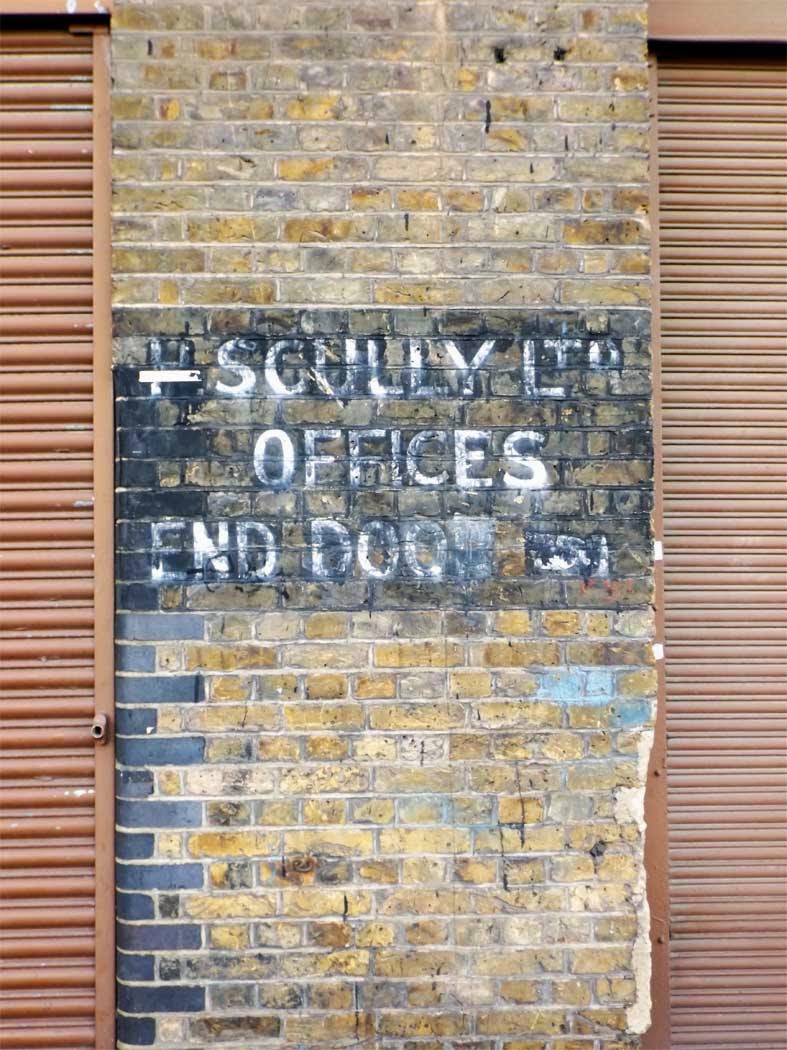
While making a beeline to the Crate Brewery in Queen's Yard (it was the tractor beam again) I spied a small ghost sign next to some warehouse doors. Despite my best efforts I've been unable to trace the buildings original occupants, H Scully Ltd, beyond that they were still trading here as recently as the 1960's. There's a great image of their warehouses taken in 1971 on David Christies Flickr page, featuring some considerably larger painted signs. Check it out here.

Although it provides an intriguing hint into the area's past, the sign's typography is fairly standard. However, it does have the distinction of being the first I've found to feature a manicule (pointing hand symbol, bottom right corner) though this is heavily faded now. A nice touch of detail nevertheless!

the cut painting hackney wick london

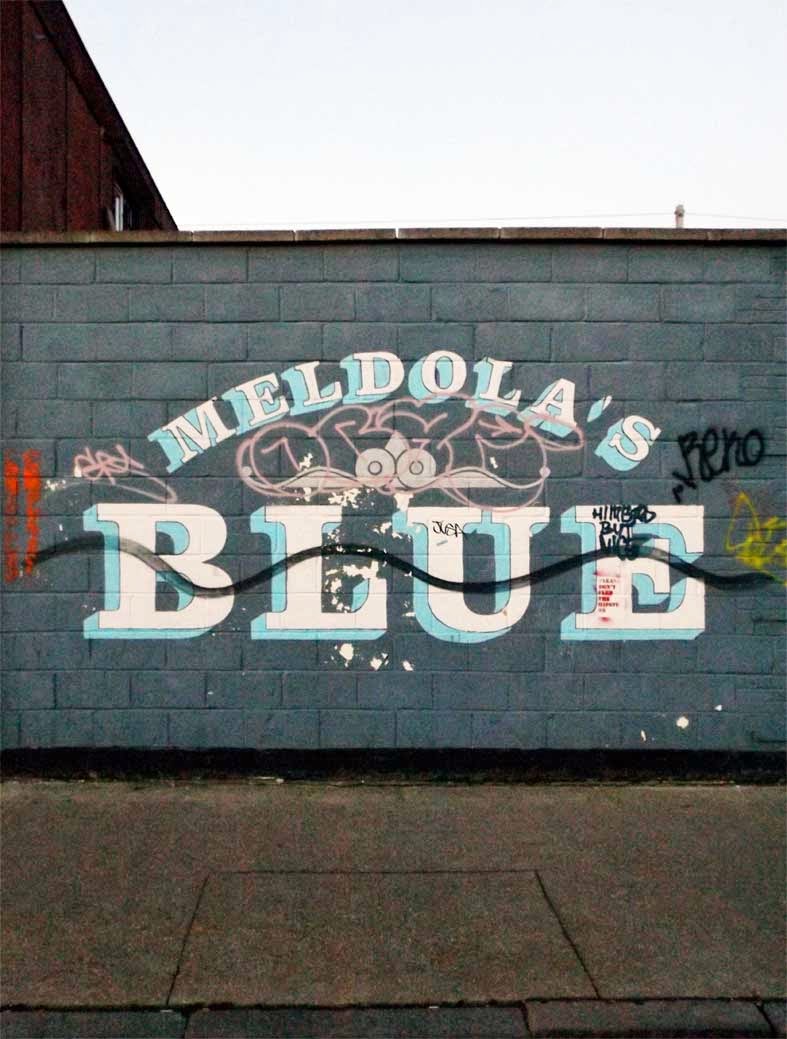
meldolas blue painting hackney wick london

On the way back to the station after an hour or two in the brewery bar we walked by this fantastic pair of modern murals painted by Bread Collective as part of their 'The Walls Have Ears' project - a celebration of important aspects of the Wick's history.

The Cut refers to the Hackney section of the Lee Navigation canal, known locally as the Hackney Cut, while Meldola's Blue is the name of a famous dye invented here by Raphael Meldola in the late 19th century. Used as a pigment for paints, papers and textiles, Meldola's Blue was a highly significant discovery and is still widely used today.

It's great to see an art project that aims to educate people about local history in a contemporary way. It's a shame that these murals have been marked by graffiti, but as the final picture of the day proves, it really is difficult to avoid this in Hackney Wick.

the lord napier pub hackney wick london

The Lord Napier is a former pub next to the Overground station that according to Closed Pubs can be traced back to at least 1874. Over the years it was owned by Ind Coope and Taylor Walker before becoming a freehouse in 1991 and closing for good in 1995.

Although it has remained largely empty ever since the Napier has become a bit of a landmark in the local area with it's ever changing roof to pavement covering of impressive street art. Occasionally home to squatters, raves and pop up exhibitions, the Napier isn't completely dead but it seems a real shame that there hasn't been an attempt to revive it in recent years.

The pubs wooden signage can still be seen behind the layers of paint but really this place is all about the manic paintings. Although it has stopped dispensing pints, The Lord Napier instead provides Hackney Wick an ever evolving canvas that brings soul and colour to the neighbourhood. It also serves as a fitting end to a great day out through some of East London's most contrasting areas.

So until next time, thanks for reading!

PS: David Christie has a great Flickr gallery on the Lord Napier, be sure to check it out here.